
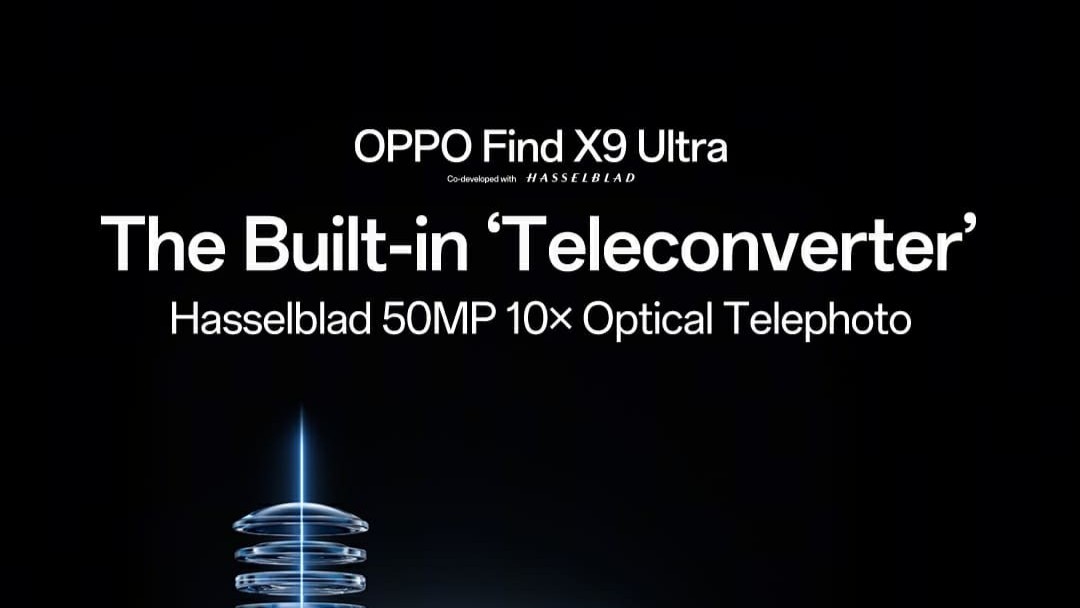
After a stellar Find X9 launch, the OPPO Find X9 Ultra will soon be available in India, bringing some exciting changes to the device, specifically aimed at boosting its camera performance. The firm is shifting its focus to hardware to enhance optical zoom capabilities, rather than relying too heavily on software.
The star attraction is QPPS, a new periscope architecture that enhances the feasibility of extended-range optical zoom. In most smartphones, optical zoom is achieved using a single prism that deflects the light path horizontally. Although this design boosts zoom range, it is constrained by the space available in the phone body.
What is QPPS?

The QPPS (Quintuple Prism Periscope Structure) is designed to extend zoom using a smarter internal setup. In the camera body, the light reflects five times before hitting the sensor, thereby increasing the length of the optical pathway. Furthermore, the OPPO Find X9 Ultra can increase its focal length without compromising its thinness. The phone, therefore, can achieve true 10x optical zoom, equivalent to a 230mm lens.
An additional benefit of optical zoom is its ability to maintain image quality. Since the zoom is handled by the camera hardware, there’s less need for cropping or digital enhancement. This leads to sharper and more natural images. In everyday use, it improves shots of distant subjects and creates a pleasing background blur. It also ensures that image quality doesn’t drop suddenly as you move between zoom levels.
A multi-reflection system improves zoom, but it also complicates light handling. Each reflection point can introduce distortion or scattered light, which can affect the final image. Without proper control, this could lead to reduced sharpness and contrast.
To overcome this, OPPO uses a refined optical design that keeps light under control throughout its path. By applying highly precise adjustments, the camera is less affected by light, ensuring image quality. It means that you can take better shots with high zoom levels.
Camera

The phone has a 200 MP resolution camera that delivers high-quality photos, a 3X zoom camera that is useful for shooting in low light, and an ultra-wide camera that captures a wider view.
These elements combine to form an equilibrium system applicable to various situations. In cases where one is shooting portraits, scenery, or distant objects, the camera can do all that. Moreover, it features 4K Dolby Vision video recording capabilities, hence being suitable for photography and video recording.
Software
In this camera system, software plays a supporting role. The LUMO Image Engine focuses on refining the image rather than artificially generating details. Instead of using software to create details that do not exist in the image, the technology uses high-powered hardware to generate the main image. This helps create a more realistic image with natural details. Afterward, the software is used to enhance the final image through minor adjustments to colors and brightness.
Software often plays a bigger role than the camera hardware itself. However, OPPO approaches this issue from a different angle, focusing more on hardware advancements. It results in more realistic and natural pictures. Also, there is better performance during long-range zoom operations.