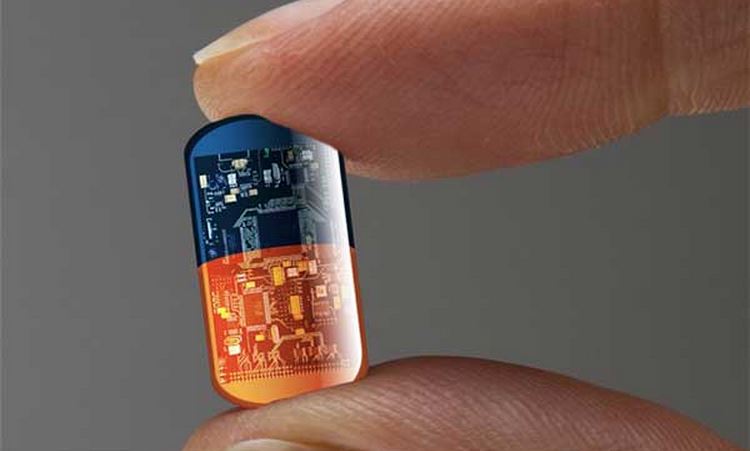
Langer connected the Gate’s Foundation with MicroCHIPS, a Massachusetts firm licensed to use a controlled-release microchip technology. The partnership between Langer and Gates has been busy with developing the technology. The chips will be ready for sale in market in the early 2018, with safety tests starting by the end of this year.
The partnership between Langer and Gates has been busy with developing the technology. The chips will be ready for sale in market in the early 2018, with safety tests starting by the end of this year.
MIT Technology Review
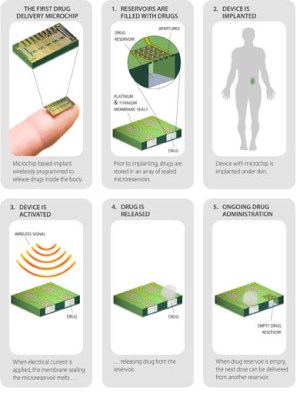
stated the implant would have to be encrypted to guard wireless data flow and keep it protected. The chip’s size is 20mm x 20mm x 7mm and reservoirs of the hormone are stored on a 1.5cm-wide microchip within the device.
The birth control microchip would hold nearly two decades worth of a hormone commonly used in contraceptives and dispense 30 micrograms a day, according to a report from the MIT Technology Review. The implant’s daily dose works by a small electric charge that melts an ultra-thin seal around the hormone. The birth control microchip can be implanted in the buttocks, upper arm or abdomen.
“The idea of using a thin membrane like an electric fuse was the most challenging and the most creative problem we had to solve,” MicroCHIPS president Robert Farra says.
The idea struck Bill Gates a few years back when he realized the difficulties the women in the Asian-African countries have to undergo to plan pregnancies. Gates said that his aim was to make every pregnancy planned and highly desirable. Once developed these chips will prove to be highly effective in controlling unplanned pregnancies and can decrease the high mother mortality rate in the Asian-African countries.
Source: fossbyte
Can this remote control implantable birth control become popular? Tell us in comments.