
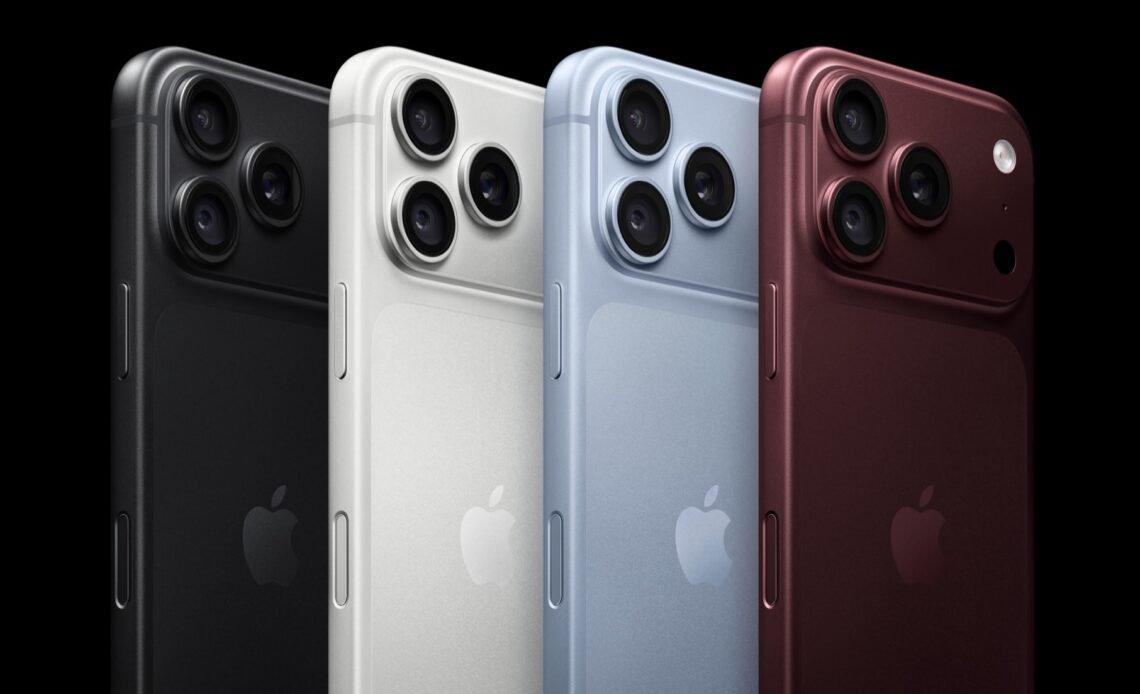
Apple has revealed the battery capacities of the iPhone 18 Pro and iPhone 18 Pro Max for the first time. Apple doesn’t usually include battery capacity in new iPhone announcements. But with the EU Energy Label regulations, Apple must release the figures. Early Geekbench results have also revealed the speed of the A20 Pro processor, giving a clearer idea of what the new Pro models offer in battery life and performance.
iPhone 18 Pro and Pro Max Battery Capacities Revealed
Apple has disclosed the new Pro range battery sizes through EU Energy Labels. The iPhone 18 Pro has a 4,056mAh battery, while the Pro Max has a 5,391mAh battery. This translates to an increase of 1.45% and 11.8%, respectively, compared with their predecessors. The comparisons should be made against their individual iPhone 17 Pro ranges. However, this comparison varies by region. EU versions have physical SIM slots, while eSIM-only models can use that space for larger batteries.
The EU Energy Labels give both models an A energy rating, B drop-resistance rating, and C repairability rating. Both phones also carry an IP68 rating for dust and water resistance. Apple says their batteries can retain at least 80% capacity after 1,000 charge cycles. For eSIM-only models, Apple claims up to 36 hours of video playback on the Pro. The Pro Max can reach up to 45 hours. Real-world ratings are 24 and 30 hours, respectively. Both models can reach 50% charge in around 15 minutes. Apple also claims that five minutes of charging can provide around six hours of video playback.
A20 Pro Geekbench Performance and New Hardware

Early Geekbench 6.7 results give a first look at the A20 Pro’s performance. Two devices listed as iPhone 19,2 and iPhone 19,3 scored 4,719 and 4,612 points in single-core tests. Their multi-core scores reached 12,677 and 11,819 points, respectively. The two results average around 4,665 points in single-core and 12,248 points in multi-core. Compared with the average iPhone 17 Pro and Pro Max results, the scores suggest around 21–23% higher performance.
Apple developed the A20 Pro using 2nm process technology. The A20 Pro CPU has six cores: two Supercores and four efficiency cores. The chip also has a seven-core GPU and a Neural Engine. The Neural Engine in this version has 32 cores. The memory bandwidth has been upgraded by 50%. According to Apple, CPU performance improves by 20% and GPU performance by 40%. These changes could make a difference in demanding games and on-device AI processing.
Apple has also optimized the A20 Pro chip packaging to improve cooling. Moreover, it uses an enlarged vapor chamber with three times the surface area of the iPhone 17 Pro. It has been claimed that this setup can help achieve up to 40% greater sustained performance. This matters because phones tend to decrease performance during prolonged use for gaming, video editing, or AI applications. Results for the latest Android chips are also unclear. For example, the Dimensity 9600 prototype achieved scores of 4,139 points in a single-core test and 13,285 points in multi-core tests. Snapdragon 8 Elite Gen 6 results also remain inconsistent, so it is too early to name a clear performance winner.
iPhone 18 Pro vs Pro Max: Which Model Should You Buy?
The iPhone 18 Pro Max suits people who value battery capacity and usage time. It has a larger battery and longer battery life, making it suitable for users with higher demands. On the other hand, users have to cope with its size and high price. The iPhone 18 Pro is designed for people who want a smaller phone without sacrificing the A20 Pro’s performance. Furthermore, Apple promises that improved efficiency may give users battery time comparable to the iPhone 17 Pro Max. Ultimately, the choice comes down to battery endurance and phone size, rather than a major performance difference.